
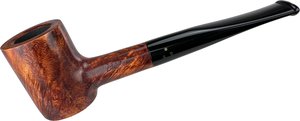
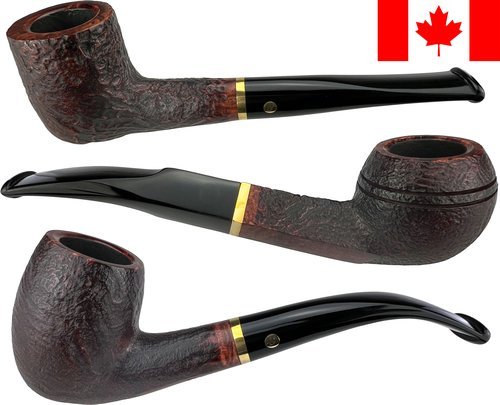
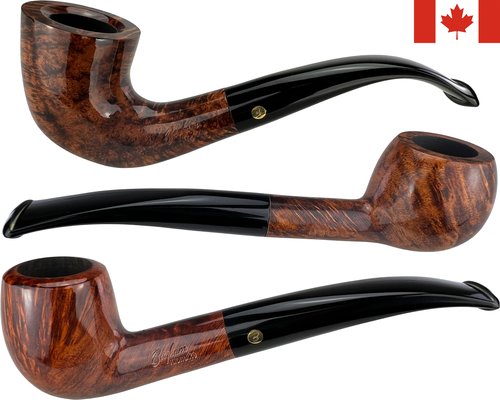
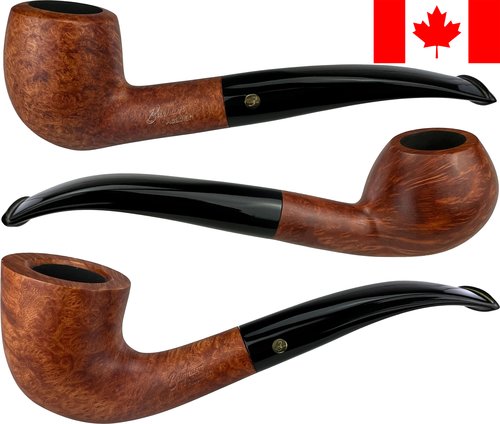

Brigham Pipes: Tradition and Innovation Since 1906
In 1906, Roy Brigham opened a small pipe repair workshop in Toronto after completing his training with an Austrian pipe maker. By 1918, the workshop had grown to employ five craftsmen, a clear sign of the brand’s early success. Through his work on numerous pipes and models, Roy Brigham identified structural flaws in many products. One major issue that caught his attention was tongue bite, which became a focal point of his innovations.
Roy Brigham and the Development of Innovative Pipe Filters
Gradually, Brigham began producing his own pipes, distinguished by improved construction and quality. In 1938, Herb Brigham, Roy's son, joined the company. Together, they conducted experiments to address the causes of tongue bite. They discovered that pipe filters could make smoking more pleasant and less harsh.

The Brighams developed filters using various materials, both imported and locally sourced. Ultimately, filters made from bamboo and rock maple proved to be the best options. Due to the high cost and limited availability of bamboo, they opted for sustainable use of locally sourced maple wood.
Brigham Rock Maple Filters: Functionality Meets Sustainability
The Rock Maple Distillators Filters are made from maple wood with an aluminum tip. Approximately 9 cm in length, they are positioned evenly between the shank and mouthpiece of the pipe. These filters excel at reducing harsh smoke and absorbing moisture. Unlike disposable filter systems, Brigham filters are reusable, can be rinsed and dried, and should be replaced after 20 to 30 uses to maintain effectiveness.
An Eco-Friendly Choice
Thanks to their reusability and the use of locally sourced maple wood, Brigham filters offer a sustainable alternative to disposable filters. They reduce waste and require no fossil-based resources such as activated carbon or extensive mining processes like those for meerschaum. The raw material grows locally in Toronto, making it an environmentally sound solution.

Brigham Pipes: Canadian Tradition in Modern Manufacturing
The peak of Brigham pipes' popularity occurred in the 1960s, when the company employed over 40 people in production. However, the increasing shortage of skilled workers and the aging workforce led to the relocation of most production to the European Union in 2001, where manufacturing continues to this day.